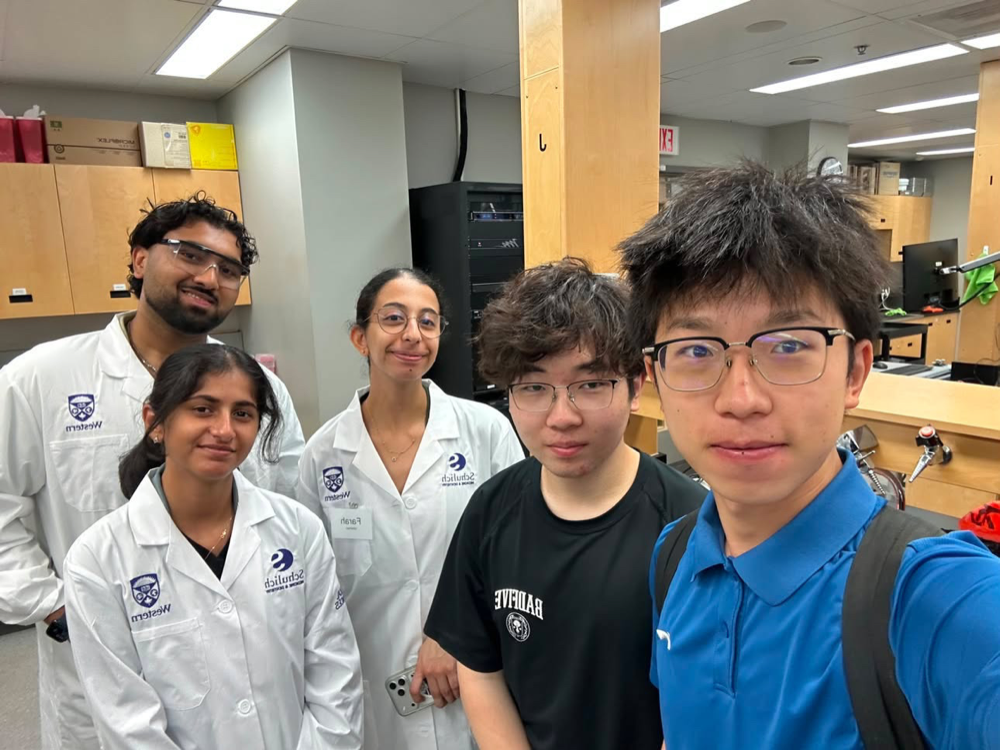
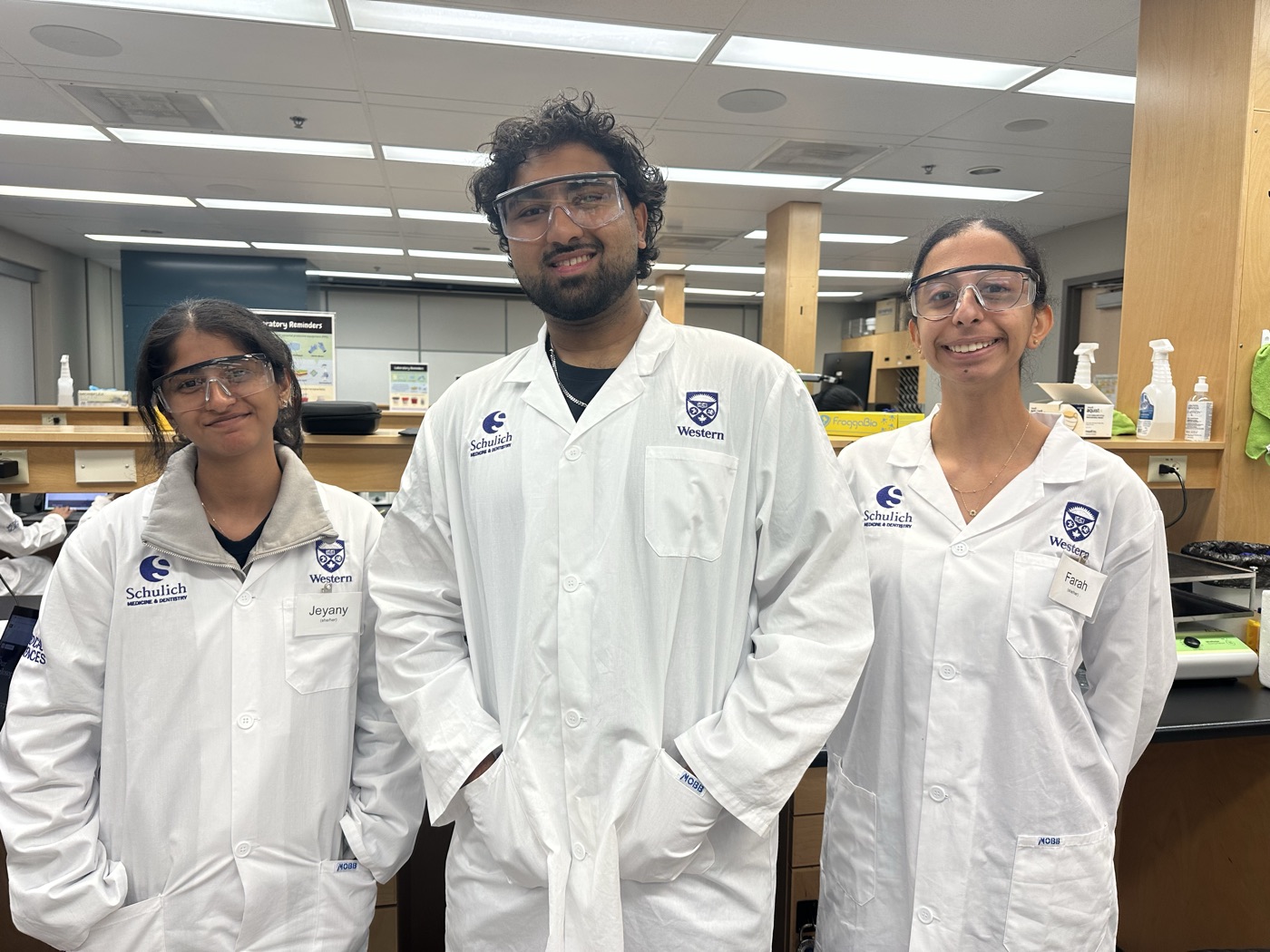
A nine-week, hands-on lab bootcamp early in the program. We ran two full experiments start to finish on lab-grown cells, one testing whether vitamin C changes how much collagen a cell makes, and one testing the best way to measure protein levels accurately.
Experiment 1
Does vitamin C change how much collagen a cell produces?
Experiment 2
What's the more accurate way to measure protein levels: comparing to one common reference protein, or to the total protein in the sample?
Week by week
Week 1
Lab Safety & Equipment Basics
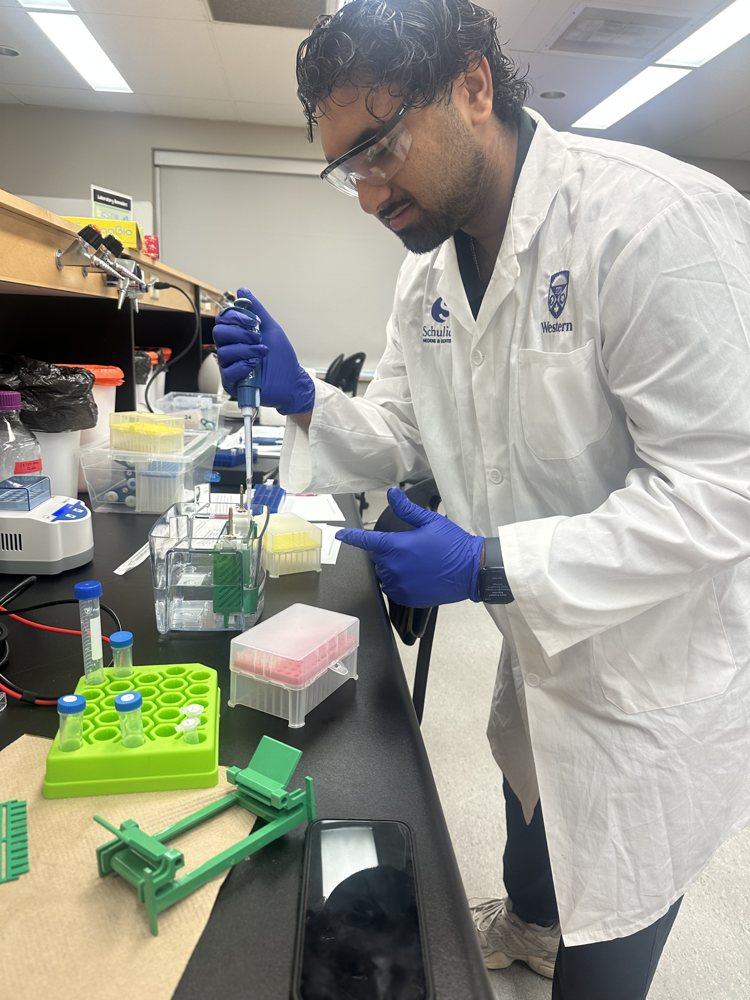
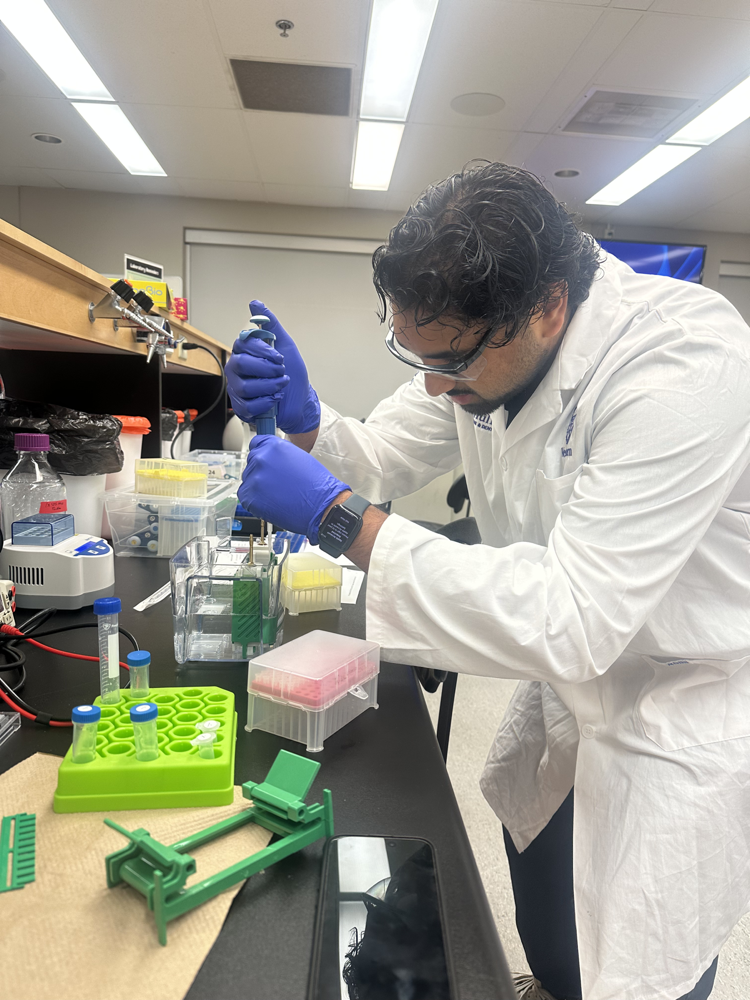
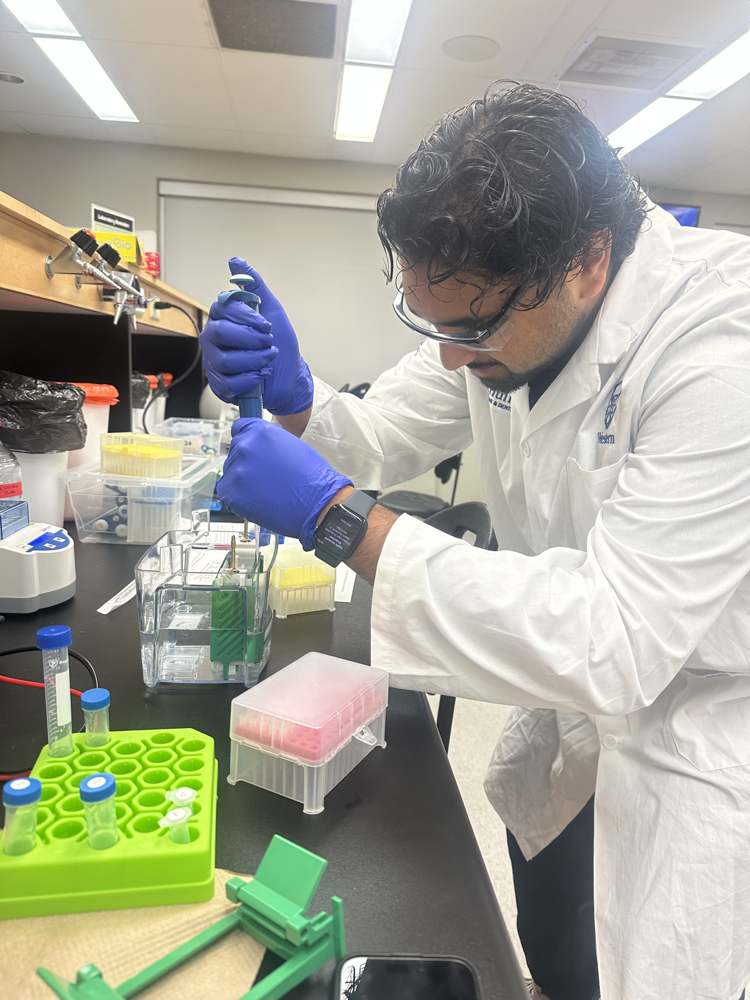
Learned lab safety and waste handling, and practiced using a micropipette (the tool for measuring out tiny, precise amounts of liquid). Also got first reps loading gel plates and building a simple measurement curve to see how accurately we could pipette.
Weeks 2–4
Growing Cells and Extracting Genetic Material
Practiced growing and handling living cells in a sterile environment, then extracted their genetic material (RNA) from vitamin-C-derivative-treated and untreated samples and converted it into a stable, workable form (cDNA). Ran tests to find the ideal conditions for accurately measuring our genes of interest before using them in a real experiment.
Weeks 5–6
Fine-Tuning and Running the Real Experiment
Fine-tuned our measurement methods to make sure they were accurate, then ran the actual experiment to see whether vitamin C changed collagen production in treated cells compared to untreated ones.
Week 7
Extracting and Measuring Protein
Broke open cells to extract their protein, then measured how much protein was in each sample using a colour-based test compared against a known standard.
Week 8
Separating Proteins by Size
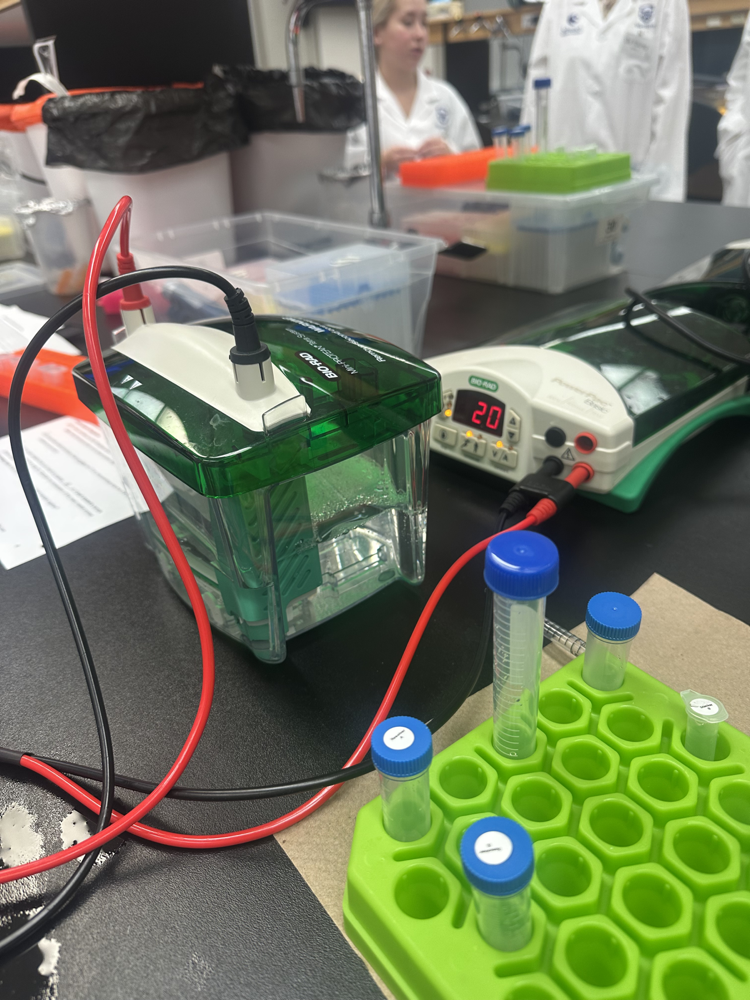
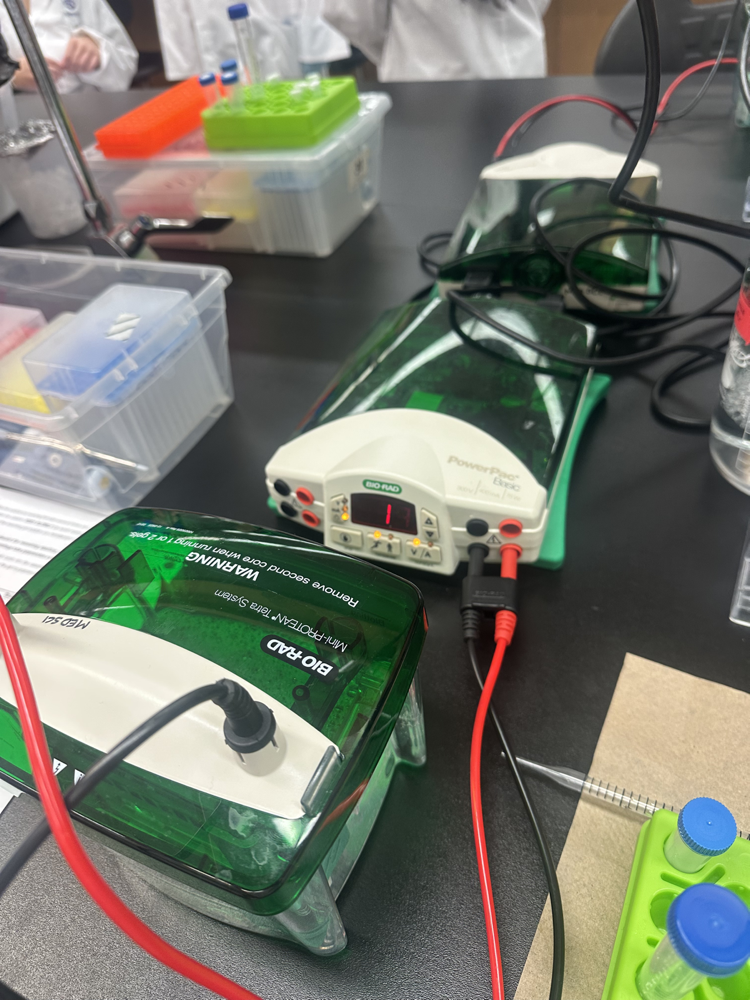
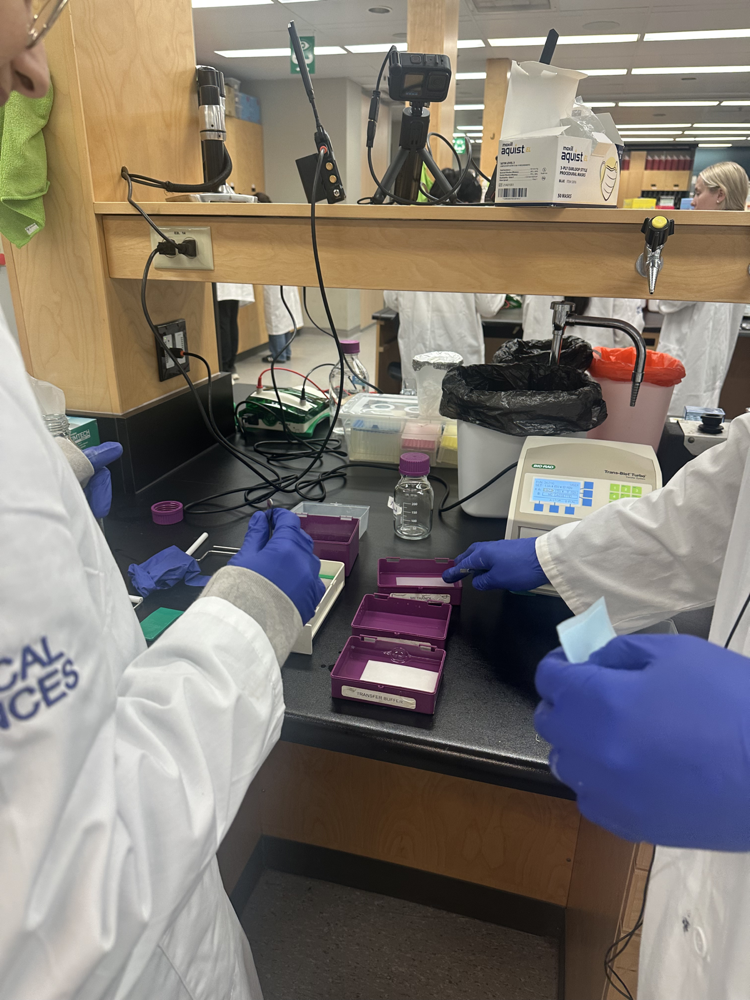
Loaded equal amounts of protein into a gel to separate them by size, then transferred them onto a membrane.
Week 9
Detecting the Protein of Interest
Used antibodies to detect and measure our specific protein of interest, then compared the two measurement approaches from Week 8.
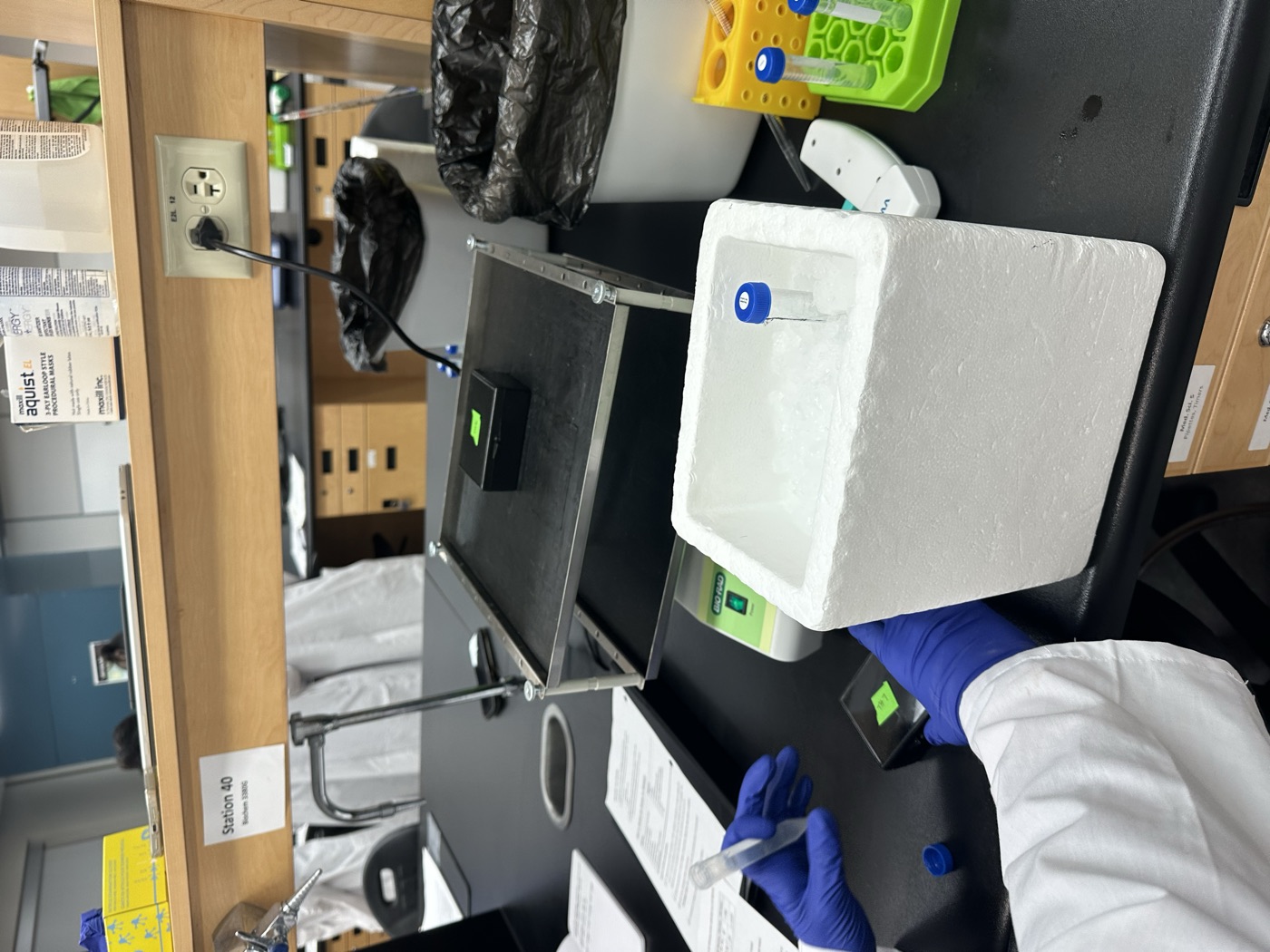
Reflection
I did labs throughout undergrad, but honestly, I often felt like I was just going through the motions. I would follow the protocol, do the calculations, and try to get the right answer for a participation mark without always understanding the bigger picture. The classes were large, it was difficult to hear the TA, and there was rarely enough time to ask questions. This teaching lab felt completely different. The smaller groups gave me the chance to actually ask questions and understand why we were doing each experiment. Working with state-of-the-art equipment also made the science feel much more real, instead of something I had only learned about in lectures. I found myself genuinely enjoying the experiments because I understood what I was doing and why it mattered. I came out of the experience with a much better understanding of research in a lab setting and a greater appreciation for hands-on science.